

Introduction
Introduction
Everybody goes through it. You want to monetize your content, but you're terrified of looking like a sellout. You've seen other creators turn their feeds into a wall of random discount codes and affiliate links. It feels cheap. It feels spammy.
Here’s what I know: you don't have to choose between making money and keeping your audience's respect. And that’s exactly why I’m writing this guide.
What Affiliate Marketing Means for Creators
Let's cut through the noise. Affiliate marketing is a performance-based income model where you promote someone else's product and earn a commission on each sale made through your unique link.
Most people think of it as a get-rich-quick trick. They think you just drop links and watch the cash roll in. It doesn't work that way.
In the creator economy, affiliate marketing is a tool to solve your audience’s problems. You are the curator. You spend the hours testing tools, reading reviews, and making mistakes so your audience doesn't have to. When you recommend a solution, you're saving them time. The commission is just your finder's fee.
Why Audience Trust Is the Real Asset
Here's the hard truth: trust takes years to build and seconds to break.
If you promote a bad product because the company offers a 50% commission, you might make a quick $1,000. But what happens next? Your audience buys it, realizes it's garbage, and feels cheated. You didn't just sell a product — you sold your reputation.
Consider a hypothetical hosting recommendation: the commission looks attractive, but the creator has not checked performance or support. Readers who encounter problems may lose confidence in later recommendations. This is an illustrative risk scenario, not a personal case study or a report about a named provider.
Your audience’s trust is your only real asset. If you protect it, they will buy from you again and again. If you burn it, no amount of traffic will save your business.
When Affiliate Marketing Fits a Creator Audience
Affiliate marketing isn't for every creator at every stage. You need to earn the right to recommend products.
Before you start adding links, ask yourself if you have built enough trust. If you only have 100 followers and have never answered a question in the comments, you aren't ready.
Affiliate income starts compounding when you have a defined niche and a clear understanding of your audience’s repeated problems. If your followers are already asking you, 'What tool did you use for that?' or 'How did you set up this system?', that's your signal. They are asking for recommendations. That is when the affiliate model fits.
How to Choose Affiliate Products Responsibly
Don't promote products you haven't used. Period.
The best recommendations come from your actual workflow. Look at your computer screen right now. What tools are you paying for? What products do you use every single day to run your business? Those are your first affiliate opportunities.
Use the checklist below to evaluate any potential product before recommending it.
Does this product solve a real audience problem?
Have I used it or researched it enough to recommend responsibly?
Can I explain who it is not for?
Is the commission influencing the recommendation too much?
Can the content stand alone without the affiliate link?
Is the disclosure clear and easy to notice?
Can I track clicks, conversions, and audience feedback?
Disclosure, Transparency, and Trust
Let’s talk about the law. The Federal Trade Commission (FTC) is very clear: you must disclose your affiliate relationships.
But this isn't just about avoiding a fine. It's about honesty.
Some creators try to hide their disclosures in tiny font at the bottom of the page. That's a huge mistake. When you hide a disclosure, you look like you have something to conceal.
Instead, make your disclosures bold and clear. Put them right at the top, before any links. Use plain English, not legal jargon. Write something like: 'Some of the links below are affiliate links, which means I earn a commission if you buy through them. I only recommend tools I actually use to run my business.'
Surprisingly, transparent disclosures can actually increase conversions. Your true fans want to support you. They appreciate the honesty.
The Content-First Affiliate Framework
If you want to build a sustainable system, you need to put content before the link.
A link by itself has zero value. The value is in the context. The framework below shows how to connect these pieces:
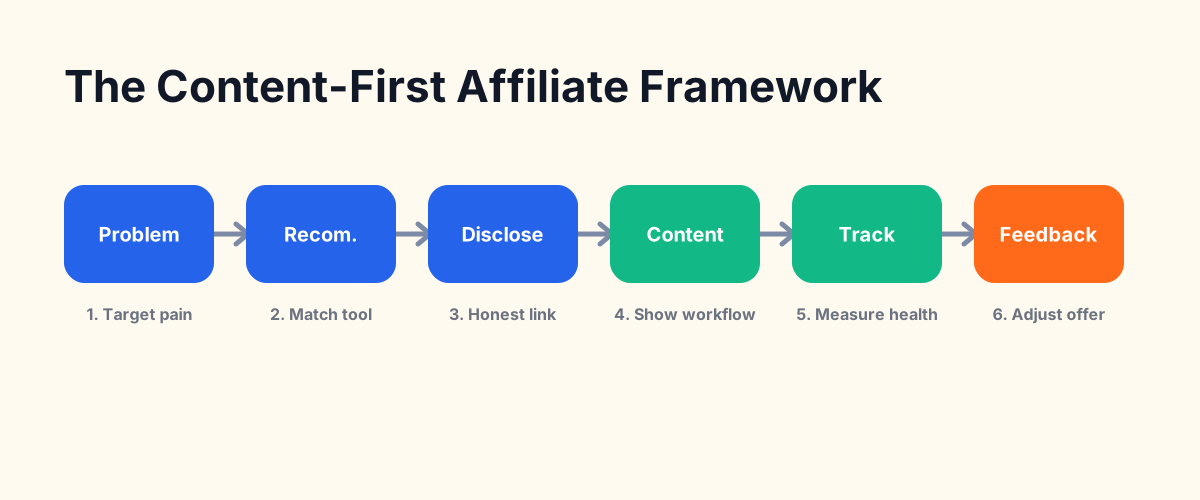
Audience Problem: Identify a repeated challenge your audience faces (e.g., trying to model creator income scenarios).
Trusted Recommendation: Match that challenge with a product you know can solve it.
Clear Disclosure: Openly state your financial relationship before presenting the solution.
Useful Content: Embed the recommendation in a tutorial, case study, or comparison guide that is valuable on its own.
Tracked Result: Monitor clicks and conversions to see if the audience actually finds the tool useful.
Feedback: Listen to user feedback and adjust, improve, or drop the product accordingly.
What to Track Beyond Clicks
Most affiliate dashboards show you click counts and payout balances. Those are vanity metrics.
If you want to run a professional creator system, you have to look deeper. Track these metrics to understand the health of your monetization path:
Clicks: Shows initial interest and heading alignment.
Conversion Rate: Tells you if the offer matched the intent of the content.
Refund Rate: The ultimate truth signal. If refunds are high, the product is failing your audience.
Audience Feedback: The comments and emails you get after someone buys.
High clicks with few conversions can reflect fit, price, tracking gaps, or a longer purchase cycle. Refunds can reveal expectation, usability, or support problems. Check the reasons and the sample size before deciding whether to revise or pause a recommendation.
Common Affiliate Marketing Mistakes
Promoting too many products: If you recommend five different email tools, you look confused. Recommend one and explain why it's the best.
Ignoring the setup: If your content has no lead capture, you are giving away traffic. Build an email list first, then recommend products.
Hiding the flaws: No product is perfect. Tell your audience what you don't like about a tool. They will trust you more for it.
Chasing high commissions: A high commission on a bad tool will destroy your reputation. Focus on relevance first.
A Simple 7-Day Affiliate Test Plan
You don't need to spend months planning. You can test a new affiliate recommendation in seven days:
Day 1: Identify one repeated audience problem. Read your comments and emails.
Day 2: Choose one relevant product or tool. Make sure it's something you actually use.
Day 3: Write the honest recommendation angle. List the pros and cons.
Day 4: Create useful content around the problem. Explain how to solve it step-by-step.
Day 5: Add clear disclosure and CTA. Make it easy to read.
Day 6: Track clicks, questions, and reactions. Watch the data.
Day 7: Decide whether to continue, improve, or stop. Let the audience signal guide you.