

Introduction
Introduction
Many creators think repurposing means taking one finished post and spreading it everywhere. That approach can create more output, but it often creates weaker output too. A paragraph that works in a blog does not automatically work as a carousel, thread, short video, email, or newsletter note.
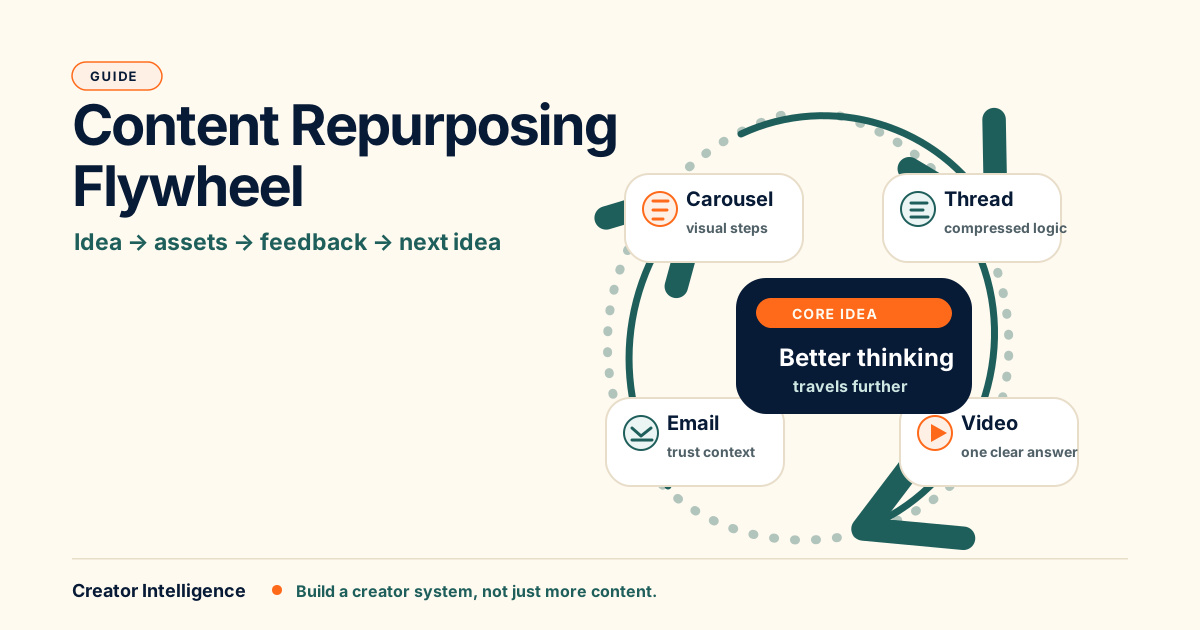
The better model is a flywheel. One strong idea becomes a source asset. The source asset becomes several platform-native pieces. Those pieces create feedback. The feedback improves the next source idea. Over time, the creator is not just publishing more. They are building a learning system.
This guide explains how to design that system without turning your content into copy-paste fragments or letting AI replace your judgment.
What Is a Content Repurposing Flywheel?
A content repurposing flywheel is a repeatable cycle for turning one well-developed idea into multiple useful assets, then using audience response to improve the next idea. It connects thinking, translation, distribution, feedback, and refinement.
The word flywheel matters because the system should get easier to operate over time. You are not starting from zero every morning. You are collecting stronger ideas, better hooks, clearer examples, and more precise audience language with every cycle.
The simple version is: core idea, source asset, platform-native assets, audience feedback, next idea. Each part has a job. If one part is missing, repurposing becomes random distribution instead of a system.
Repurposing Is Not Copy-Paste Distribution
Copy-paste distribution asks, 'Where else can I put this?' A repurposing flywheel asks, 'How should this idea change shape so it is useful in this specific context?' That difference protects the quality of the idea.
A blog post can hold nuance. A carousel needs sequence. A thread needs compression. A short video needs one sharp opening and a visible movement through the point. An email can add story and reflection. If every platform receives the same text, the creator is ignoring how people actually consume each channel.
The aim is not to dilute thinking into smaller pieces. The aim is to make the strongest thinking easier to discover, understand, save, discuss, and apply.
Core rule: keep the insight, redesign the expression.
The Five-Part Flywheel
Use this five-part model to make repurposing operational instead of improvised.
A practical content repurposing flywheel for creators.
| Stage | Question | Output |
|---|---|---|
| 1. Core idea | What is the useful claim or lesson? | One clear thesis the audience can remember. |
| 2. Source asset | Where does the idea get developed fully? | A blog post, video outline, podcast segment, or newsletter essay. |
| 3. Platform-native translation | How should the idea change shape for each channel? | Carousels, threads, short scripts, emails, visuals, and discussion prompts. |
| 4. Feedback capture | What did people save, ask, click, or challenge? | Signals, questions, objections, and stronger audience language. |
| 5. Next idea | What should this teach us to create next? | A sharper follow-up guide, tool, prompt, or framework. |
Stage 1: Start With a Core Idea Worth Repeating
Repurposing works only when the source idea is strong enough to survive translation. Before you create platform assets, write the idea as a single sentence. It should make a useful claim, not simply name a topic.
For example, 'content repurposing' is a topic. 'Repurposing is a learning system that turns one strong idea into platform-native assets and better future ideas' is a thesis. The second version gives every later asset a strategic center.
Name the creator problem the idea solves.
Write the thesis in one sentence.
List the audience questions the idea should answer.
Decide what the reader should do differently after seeing it.
Stage 2: Build a Source Asset Before Smaller Assets
The source asset is where the thinking becomes structured. It may be a blog post, video script, podcast outline, workshop note, or newsletter essay. The format matters less than the depth. A good source asset contains definitions, examples, objections, steps, and a final takeaway.
Without a source asset, creators often repurpose from fragments. That creates scattered posts with no shared logic. With a source asset, every smaller piece has a reliable reference point.
A source asset is not always long, but it should be complete enough to support multiple interpretations of the same idea.
Stage 3: Translate for Each Platform Native Format
Platform-native translation means changing the format without changing the strategic idea. A creator should not ask, 'How can I post this everywhere?' The better question is, 'What job should this idea do on this platform?'
Each channel can carry a different layer of the same idea. One platform might introduce the thesis. Another might visualize the framework. Another might invite debate. Another might help the audience apply the idea privately.
How one idea can become platform-native assets without becoming repetitive.
| Asset | Best job | Translation rule |
|---|---|---|
| Blog post | Develop the full argument | Explain the thesis, framework, examples, and next steps. |
| Instagram carousel | Make the framework save-worthy | Turn the idea into visual steps or a before-after sequence. |
| Threads post | Invite discussion | Make the point conversational and end with a useful question. |
| X thread | Compress the logic | Break the argument into short, ordered claims. |
| Short video | Make one idea visible | Explain one question with a clear opening and one movement through the point. |
| Deepen context | Add story, reflection, or a practical prompt for the reader. |
Where AI Fits in the Flywheel
AI can be useful inside a repurposing system, but it should not become the strategist. The creator still owns the thesis, judgment, examples, boundaries, and final edit.
The best use of AI is operational: extract hooks from the source asset, identify reusable sections, draft platform-specific outlines, create alternate CTA options, and summarize audience questions after a cycle. The creator then reviews for accuracy, voice, usefulness, and fit.
Use AI to extract possible hooks, not to decide what you believe.
Use AI to draft format variations, not to erase your voice.
Use AI to compare platform constraints, not to invent unsupported claims.
Use AI to summarize feedback, not to replace your interpretation of the audience.
Stage 4: Capture Feedback Intentionally
The flywheel becomes valuable when the creator pays attention to what comes back. Feedback is not just a dashboard. It is evidence about what the audience understands, saves, questions, resists, and wants to explore next.
A useful review looks for patterns rather than single-post reactions. Which hook created thoughtful replies? Which visual made the framework easier to understand? Which question revealed confusion? Which CTA moved people to read the full guide or try a tool?
Saves can show which ideas people want to keep.
Replies can reveal questions and objections.
Shares can show which explanations feel useful to pass along.
Clicks can show which promise made people want more depth.
Low response can show that the hook, format, or audience match needs work.
Stage 5: Turn Feedback Into the Next Stronger Idea
A weak repurposing process ends when the posts are published. A strong flywheel ends by choosing the next better source idea. The creator reviews the cycle and asks what deserves to be clarified, expanded, challenged, or turned into a tool.
This is where a multichannel system compounds. The next blog post, video, email, or prompt is not chosen from a blank page. It is chosen from audience language and real friction collected during the last cycle.
The output of one cycle should become the research input for the next cycle.
A Simple Weekly Repurposing Rhythm
A creator does not need a complex calendar to start. A simple weekly rhythm is enough to make the flywheel visible.
A calm weekly rhythm for operating the repurposing flywheel.
| Day | Focus | Output |
|---|---|---|
| Day 1 | Develop the source idea | Blog post, outline, or long-form draft. |
| Day 2 | Extract the core assets | Hooks, framework, examples, objections, and questions. |
| Day 3 | Translate for visual and conversational channels | Carousel outline, discussion post, and thread. |
| Day 4 | Translate for video and email | Short script and email note. |
| Day 5 | Publish and route attention back to depth | Platform-native posts with clear next steps. |
| Day 6 | Review feedback | Questions, saves, replies, clicks, and unclear points. |
| Day 7 | Choose the next source idea | Follow-up topic, framework, tool, or FAQ expansion. |
Common Mistakes to Avoid
Starting with formats before clarifying the idea.
Posting the same wording everywhere instead of translating the insight.
Using AI output without checking voice, accuracy, and usefulness.
Measuring only reach signals while ignoring questions, saves, clicks, and objections.
Ending the workflow at publishing instead of feeding lessons into the next idea.