

Introduction
Introduction
Most creators pick a revenue model the wrong way: they look at what pays the most, or what another creator is doing, and copy it. Then it does not work — and they blame themselves instead of the mismatch.
Here is the real rule: the model follows the audience. The same audience signal that makes one model work well makes another one fail.
This guide shows you the six common revenue models, how to match one to your audience's trust, format, and stage, and how to test it small before you scale.
Why the Best Revenue Model Depends on Audience Fit
There is no single best creator revenue model. There is only the one that fits your audience right now.
Picture two creators with the same follower count. One teaches a specific skill, and their audience asks 'how do I do this?' every week. The other posts entertainment, and their audience watches, laughs, and scrolls on. The first can sell a product or a coaching call tomorrow; the second is better set up for sponsorships and platform ads. Same size — completely different right answer.
That is why copying another creator's model is a trap. You are not copying their audience's behavior, which is the part that actually decides the outcome.
The Six Common Creator Revenue Models
Each model converts a different audience signal into income. Here is what each one really is, and who it is for.
Platform ads — the platform pays you a share of ad revenue for views. Best for high-volume, broad-watch content; the most passive to run, but it needs real, consistent reach before it is meaningful.
Sponsorships — a brand pays for access to your audience. Best when your niche is clearly defined and brands want the people you reach. Real income, but irregular and brand-controlled.
Affiliate — you recommend tools you already use and earn a commission. Best when you review or teach with specific products. Low setup, but it only works when the recommendation is genuinely relevant — and disclosed.
Digital products — a template, guide, or course you own and sell. Best when your audience has a repeated, specific problem you can package a solution for. You control price and timing.
Coaching / consulting — you sell your time and expertise directly. Best when trust is high and the problem is valuable. Highest revenue per sale and fewest buyers needed, but capped by your hours.
Membership / community — recurring access to ongoing value. Best when you have an engaged core and can facilitate consistently. Durable revenue, but the hardest to sustain.
Match the Model to Audience Trust and Buying Intent
Trust and buying intent decide which models can even work.
Implementation questions can reveal a problem worth researching, but they do not establish willingness to pay. Ask how people currently solve it, what alternatives cost, and whether they will commit to a clearly described offer before investing in a product or coaching service.
If your audience engages but does not ask to do anything — they watch for entertainment or general interest — that is attention without buying intent. That audience monetizes better through platform ads and sponsorships, where the brand or platform pays for reach instead of the audience paying you directly.
The higher and more specific the trust, the further you can move toward direct, owned models like products and coaching. The broader and more passive the attention, the more you lean on reach-based models like ads and sponsorships.
Match the Model to Your Content Format
Your existing format quietly favors certain models.
Long-form video supports platform ads and sponsorships well, and can sell products through demonstration.
Short-form video drives reach and sponsorships, but converts to owned offers best when it points to an email list or a simple product.
Newsletter or writing is strong for affiliate, digital products, and paid tiers — you already have an owned channel and direct attention.
Visual and image platforms lean to sponsorships and affiliate, and to products once you have built teaching trust alongside the aesthetic.
You do not have to change formats to monetize. Pick the model your format already supports — then add an owned channel so you are not renting your whole business from an algorithm.
Match the Model to Your Current Creator Stage
Stage matters as much as fit.
Early (small, growing audience): start with high-trust, low-reach models — coaching, services, or a simple digital product. They need the fewest buyers, so they can earn before you have scale.
Established (consistent reach in a niche): layer in sponsorships and affiliate. You now have the audience definition brands want and the credibility recommendations need.
Scaled (large, consistent reach): platform ads and broad sponsorships finally pay meaningfully, and you can run products, coaching, and membership as a portfolio.
The mistake is reaching for a late-stage model early — chasing ad revenue or big sponsorships before you have the reach that makes them work.
Comparison Table: Which Model Fits Which Audience?
Use this to match the model to the audience signal, the input it needs, and the smallest first test.
Six creator revenue models — best fit, main input, main risk, a first test, and the matching Creator Revenue Calculator model.
| Revenue Model | Best Fit | Main Input | Main Risk | First Test | Calculator Model |
|---|---|---|---|---|---|
| Platform ads | Broad, high-watch-time content | Consistent reach/views | Low RPM, platform-dependent | Check your RPM once eligible | Platform ad income |
| Sponsorships | A defined niche brands want | Reach + audience fit | Irregular, brand-controlled | One paid post at a fair rate | Sponsorship income |
| Affiliate | You review/teach with tools | Trust + relevant products | Low conversion if not relevant | Recommend one tool you use (disclosed) | Affiliate income |
| Digital products | Audience with a repeated problem | Trust + a clear offer | Build time before validation | A small template or guide | Digital product income |
| Coaching / consulting | High trust + a valuable problem | Your time + expertise | Does not scale past your hours | One paid audit or strategy call | Coaching income |
| Membership / community | Engaged core + ongoing value | Consistent facilitation | Churn; hard to sustain | A paid cohort before recurring | Membership / recurring income |
How to Test One Model Before Scaling
Do not bet the year on a guess. Run one small test.
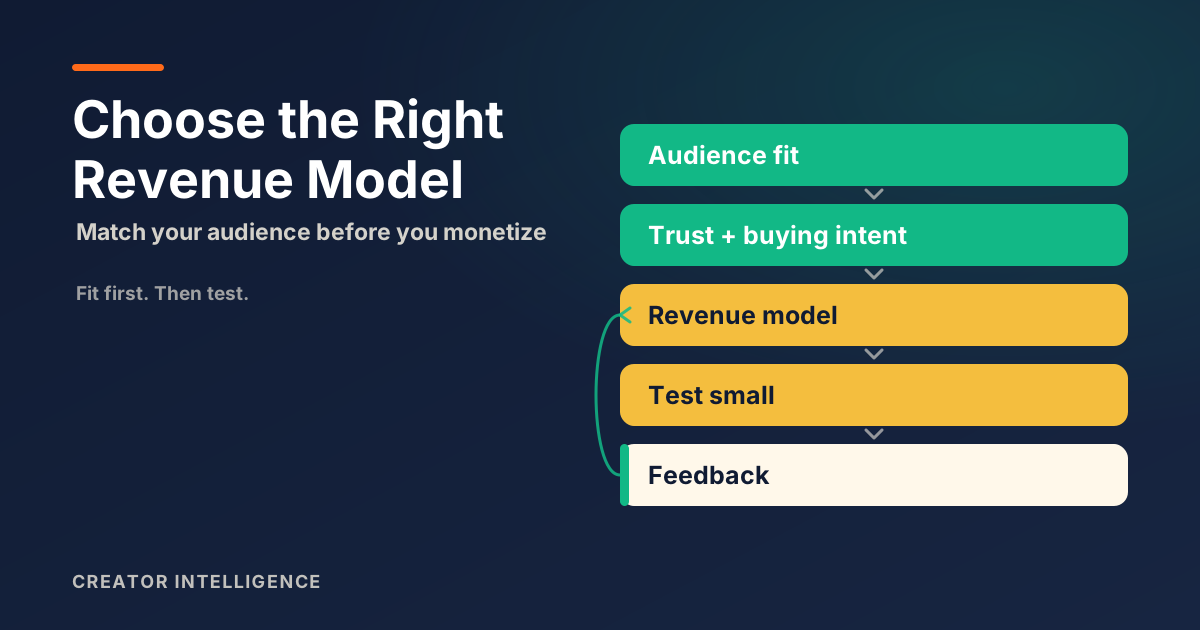
Pick the single model that best fits your audience signal, format, and stage. Build the smallest possible version — one product, one paid call, one sponsored post, one recommendation — and offer it to the warmest part of your audience. Then read the result: did people buy, and what did they say?
A test gives you data instead of opinions. Three sales and five buyer conversations tell you more about your real model than another month of theorizing. If it works, scale it; if it does not, you spent a week, not a quarter, and the next test is sharper.
Before you commit to a number, model it. The Creator Revenue Calculator compares platform ads, sponsorships, affiliate, digital products, coaching, and utility-site income at your actual audience size.
Common Mistakes Creators Make
Choosing the model with the highest theoretical ceiling instead of the best audience fit.
Treating followers and views as a business model rather than an input that still needs converting.
Reaching for ad revenue or big sponsorships before having the reach those models require.
Building a big product or course before validating demand with a small offer.
Promoting affiliate or sponsored products that do not fit the audience — and not disclosing them.
Committing to one model permanently instead of testing small and adjusting.
Compliance note: affiliate links and sponsored content are material connections and must be disclosed clearly — say 'affiliate link,' 'sponsored,' or 'paid partnership.' In the U.S., the FTC Endorsement Guides set this expectation. This is general guidance, not legal advice.