

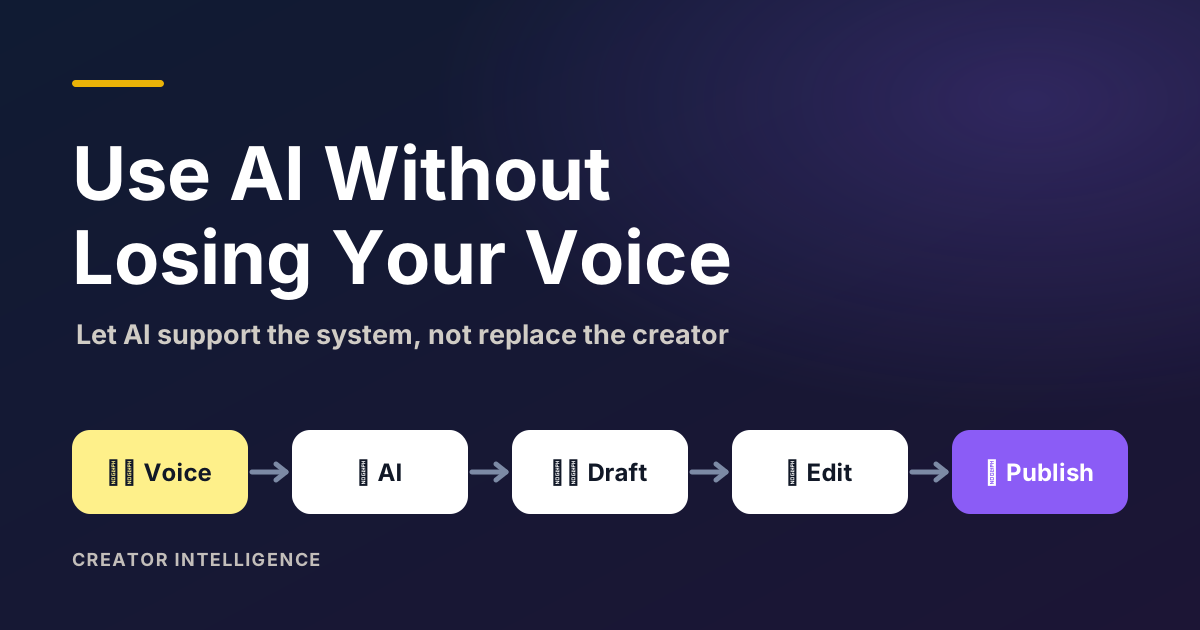
Introduction
Introduction
Everybody goes through it. You open an AI chatbot, type in a simple prompt like *'write me a post about email marketing,'* and wait.
A few seconds later, the screen fills with text. You read it, and your heart sinks. It's full of words like *leverage*, *delve*, *testament*, and *beacon*. It sounds like a generic corporate pamphlet. It has zero personality.
Here’s what I know: the problem isn't the AI. The problem is your prompt. If you feed the machine average inputs, you will get average outputs. And in the creator economy, average is a death sentence.
Why AI content often sounds generic
An AI draft can sound generic when the prompt leaves the audience, purpose, and style unspecified. Supplying real context and examples gives you a more concrete basis for reviewing the draft; it does not remove the need to check accuracy.
Most creators use 'one-shot' prompting. They ask the AI to write a whole post in one go. That's a huge mistake. The AI doesn't know who you are, what your niche is, or what you believe. It guesses. And it usually guesses wrong.
When every creator has access to the same tools, volume is no longer a competitive advantage. Anyone can publish ten articles a day using AI. The result? A flood of sameness. The only thing that stands out in a crowded market is a unique, human point of view. If you lose your voice, you lose your audience.
What “creator voice” actually means
Your voice is not just a list of words. It is your perspective.
It is the specific failures you've survived, the numbers you've hit, the hard lessons you've learned, and the rules you live by.
For example, a creator can describe a documented decision, what happened, and what changed afterward. Use a revenue figure only when records support it and the context is clear. Never add invented earnings or a first-person experience just to make a draft sound more credible.
Your voice is also your rhythm. It’s the short, punchy sentences you use to drive a point home. It’s the parentheses you use for informal asides. (Yes, like this one.) If you want the AI to sound like you, you have to show it these patterns.
Where AI should help in the content workflow
You don't need to outsource your thinking to AI. You need to outsource your administration.
In a professional creator system, AI should act as an assistant, not the creator. The diagram below shows the workflow:
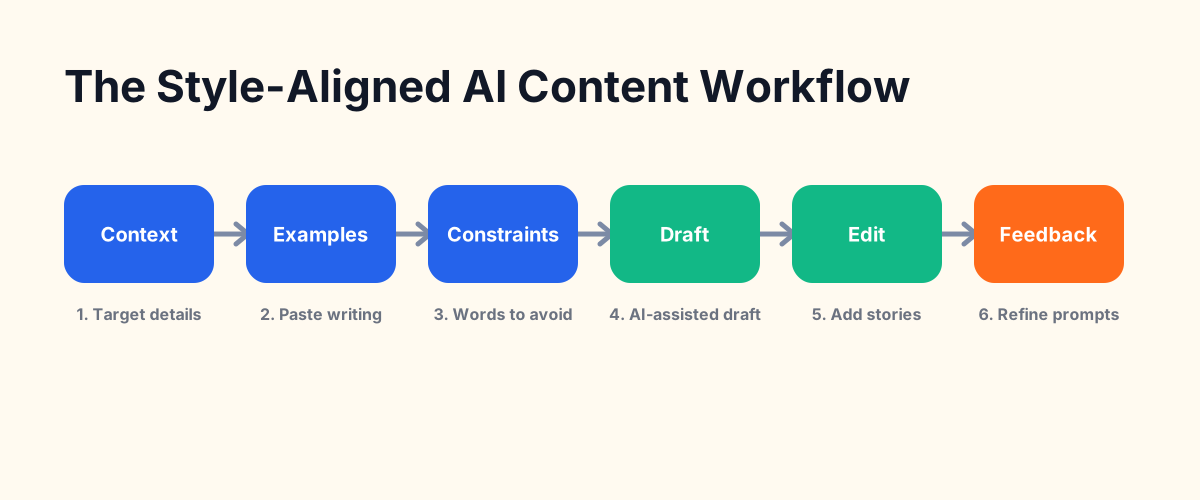
What AI should not replace
Do not let AI write your opinions.
If you ask the AI, 'What should I think about affiliate marketing?', it will give you a list of safe, neutral opinions. Safe opinions are boring. Nobody follows a creator for safe, neutral opinions.
Your audience follows you because they trust your judgment. They want to know what you believe. They want to hear about the time you failed. They want to know why you think the common advice is wrong. If you remove your personal judgment from the content, you destroy the trust that runs your business.
How to give AI better context
Vague inputs yield vague outputs. If you want better drafts, you must build a structured prompt.
Never start a prompt with 'write a blog post.' Instead, give the model a role, details about your target audience, the format constraints, and style references. The more context you provide, the closer the output will match your expectations.
Create a simple style guide
You don't need a 50-page brand guide. You need a simple, bulleted style sheet that you can paste into your prompts.
Your guide should include your primary tone attributes (e.g., warm but direct, credible), sentence pacing constraints, caps and exclamation limits, and an explicit list of corporate words to avoid (like delve, leverage, testament, and elevate).
Use AI for structure, not personality
The smartest way to write with AI is to let it build the skeleton, while you add the flesh.
Ask the AI to generate a detailed outline based on your research notes. Review the outline. Is the logical flow correct? Does it address the reader's main questions?
Once you approve the structure, write the key points yourself, or ask the AI to draft individual sections one at a time using your style sheet. Drafting section-by-section keeps the model focused and prevents it from sliding back into generic corporate writing.
The human review checklist
Before you hit publish on any AI-assisted content, run through the quality checklist. The editing phase is your quality moat.
Does this sound like something I would actually say?
Is the main idea specific enough?
Did I add my own story, example, or point of view?
Are there unsupported claims?
Is the CTA aligned with the audience’s trust level?
Is the content useful even without AI polish?
Example prompt framework
You can copy and paste our structured prompt template directly into your AI editor to enforce voice constraints on drafts, topics, outlines, and repurposing.
Audience, Platform, Goal, My voice samples, Do's, Avoid's, Output format, and Review criteria should all be specified in the template.