

Introduction
Introduction
Most creator monetization advice sounds like a menu: ads, sponsors, affiliates, products, coaching, membership, websites. The hard part is not knowing the options. It is knowing which option fits the creator system you actually have.
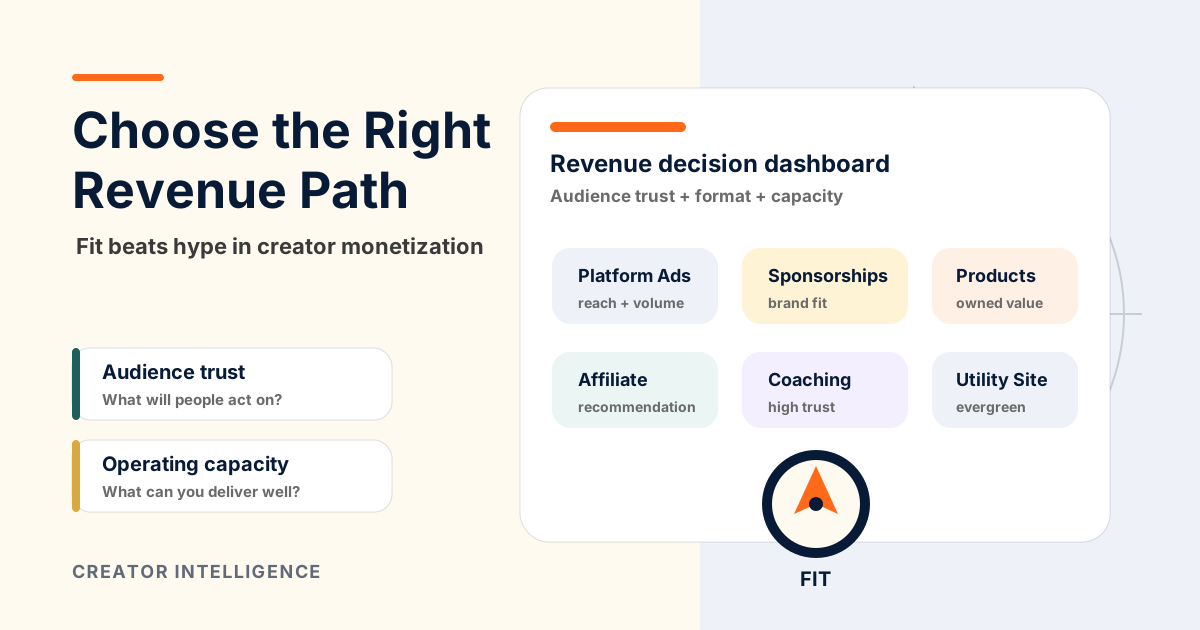
A revenue model is not just how money enters the business. It is a match between audience behavior, trust, content format, offer readiness, traffic, and your capacity to operate the model.
This guide compares platform ads, sponsorships, digital products, affiliate income, coaching or consulting, and utility websites so you can choose the first path to test without chasing the loudest example.
The Problem With Copying Another Creator's Revenue Model
Copying a revenue model looks logical from the outside. If another creator earns from sponsorships or digital products, it is tempting to assume the model is the reason.
But you are not copying their audience trust, niche economics, traffic history, offer depth, backend systems, or operational support. Those hidden inputs decide whether the model works.
A small expert audience can support coaching or a digital product before platform ads matter. A large entertainment audience may earn more from ads and sponsors than from a niche product. Neither creator is wrong. They are playing different games.
Platform Ad Revenue: Best for Reach and Volume
Platform ad revenue is the money a platform shares with creators based on views, watch time, impressions, or similar attention metrics. It is attractive because the creator does not have to sell directly to the audience.
The tradeoff is control. Rates vary by platform, niche, geography, season, and policy. You need meaningful volume before the numbers matter, and the platform controls eligibility and terms.
Best fit: broad content, high watch time, search or recommendation-driven reach.
Requires: consistent volume and platform eligibility.
Strength: simple monetization once the reach exists.
Risk: low control and high dependency on platform rules.
Best next step: model conservative RPM assumptions in the Creator Revenue Calculator.
Sponsorships: Best for Trust and Brand Alignment
Sponsorships work when a brand pays to access the audience you have earned. The strongest sponsorships are not random logo placements; they are aligned recommendations, integrations, or campaigns that make sense to the audience.
This model can work before massive scale if the niche is valuable and well-defined. A creator with a smaller but highly specific audience can be more useful to a brand than a larger creator with vague attention.
Best fit: clear niche, audience trust, and brand-relevant content.
Requires: media kit, positioning, disclosure discipline, and delivery reliability.
Strength: can create meaningful income without building a product.
Risk: irregular deals and possible trust loss if the fit is weak.
Best next step: identify 10 brands your audience already uses or asks about.
Digital Products: Best for Owned Expertise and Repeatable Value
Digital products convert your expertise into something people can buy repeatedly: templates, guides, courses, toolkits, workshops, swipe files, or paid frameworks.
This model works best when your audience has a repeated problem and already trusts your method. It is less dependent on constant posting than ads, but it requires offer clarity, product quality, delivery, support, and validation.
Best fit: educational, problem-solving, or transformation-focused creators.
Requires: a clear problem, validated demand, and a useful product promise.
Strength: you control the offer, price, positioning, and customer relationship.
Risk: building before demand is proven.
Best next step: validate one small product before building a large course.
Affiliate Income: Best for Recommendation-Based Creators
Affiliate income works when a creator recommends a product and earns a commission when someone buys or signs up through their link. It fits creators who teach, review, compare, or demonstrate tools and products.
The model depends on trust. Recommending too many irrelevant products weakens the audience relationship. Good affiliate strategy starts with products the creator would recommend even without a commission, and material connections should be disclosed clearly.
Coaching/Consulting: Best for High-Trust Problem Solving
Coaching and consulting sell access to your judgment. This can be the strongest early monetization path for creators with expertise because it needs fewer buyers than ads, sponsorships, or low-priced products.
The tradeoff is capacity. Your time becomes the delivery engine. That can be useful at first because calls reveal buyer language, objections, and product opportunities. Later, you may want to turn repeated work into templates, group programs, or digital products.
Utility Websites: Best for Search-Based and Evergreen Traffic
A utility website earns by solving a repeated search-driven problem: calculators, directories, templates, comparison pages, checklists, or niche reference tools. Monetization might come from ads, affiliates, email capture, sponsorships, or paid upgrades.
This model fits creators who can create useful evergreen assets and understand search intent. It usually takes longer to compound than a direct offer, but it can become a durable audience and feedback asset when the tool is genuinely useful.
Comparison Table
Use this table to compare the models by fit, requirements, strengths, risks, and the next practical step.
Creator revenue models compared by best fit, requirements, strength, risk, and best next step.
| Revenue Model | Best For | Requires | Strength | Risk | Best Next Step |
|---|---|---|---|---|---|
| Platform Ads | Creators with consistent reach, watch time, or pageviews. | Volume, eligibility, platform rules, and repeat publishing. | Low-friction once attention exists. | Low control, variable rates, platform dependency. | Estimate realistic RPM or CPM scenarios in the calculator. |
| Sponsorships | Creators with a defined audience brands want to reach. | Trust, niche clarity, media kit, disclosure, reliable delivery. | Meaningful revenue without building a product. | Irregular deal flow and brand-fit risk. | Build a brand-fit list and one simple sponsorship package. |
| Digital Products | Creators with owned expertise and repeated audience problems. | Validated demand, offer clarity, product quality, fulfillment. | Owned asset with price and positioning control. | Build time before proof if not validated. | Test a small template, guide, or workshop first. |
| Affiliate Income | Creators whose audience asks for tools, products, or recommendations. | Relevant products, trust, disclosure, buyer intent. | Low setup and fits educational content. | Trust damage if recommendations are weak. | Recommend one product you truly use with clear disclosure. |
| Coaching / Consulting | Creators with high trust around valuable problems. | Expertise, availability, sales calls, delivery quality. | High revenue per buyer and fast learning. | Capacity limits and delivery fatigue. | Offer one paid audit, call, or strategy session. |
| Utility Website | Creators with search-based evergreen problems to solve. | Useful tool/content, SEO intent, maintenance, monetization path. | Compounding traffic and owned discovery. | Slow ramp and ongoing upkeep. | Build one useful page or calculator around a repeated query. |
Decision Framework
Choose the model by matching it to the strongest signal you already have. If your signal is volume, ads may fit. If your signal is audience definition, sponsorships may fit. If your signal is repeated problem and trust, digital products or coaching may fit. If your signal is tool questions, affiliate may fit. If your signal is search demand, a utility website may fit.
Then consider your operating capacity. A model can be strategically correct and still wrong for this season if you cannot fulfill it well.
A simple decision framework for choosing your first creator revenue path.
| If Your Strongest Signal Is... | Consider First | Why |
|---|---|---|
| High views or watch time | Platform Ads | The audience behavior is already volume-driven. |
| A niche brands clearly want | Sponsorships | Brands may pay for aligned access before you have a product. |
| Repeated how-to questions | Digital Products | The audience is asking for packaged help. |
| High trust and expensive problems | Coaching / Consulting | A few buyers can validate the problem quickly. |
| Tool or product recommendation demand | Affiliate Income | You can monetize useful recommendations if trust is protected. |
| Searchable evergreen problems | Utility Website | Useful pages and tools can compound outside feeds. |
Mistakes to Avoid
Choosing the model with the highest visible upside instead of the best fit.
Starting with platform ads when you do not yet have enough volume.
Pitching sponsors before the niche and audience value are clear.
Building a digital product before validating the repeated problem.
Using affiliate links for products you would not recommend without a commission.
Selling coaching without clear scope, boundaries, or delivery expectations.
Building a utility website without a real search problem or maintenance plan.
How to Choose Your First Revenue Path
Your first revenue path should be the one that gives you the fastest honest signal without overwhelming the system.
Pick one model, define the smallest test, set conservative expectations, and decide what result would make you continue, adjust, or stop. That might be one paid call, one affiliate review, one sponsor pitch, one small product waitlist, one useful calculator page, or a simple ad revenue forecast once eligible.
Use the Creator Revenue Calculator to compare scenarios, then take the Creator System Readiness Quiz if you are not sure whether your audience, content, offer, or feedback loop is ready.