

Introduction
Introduction
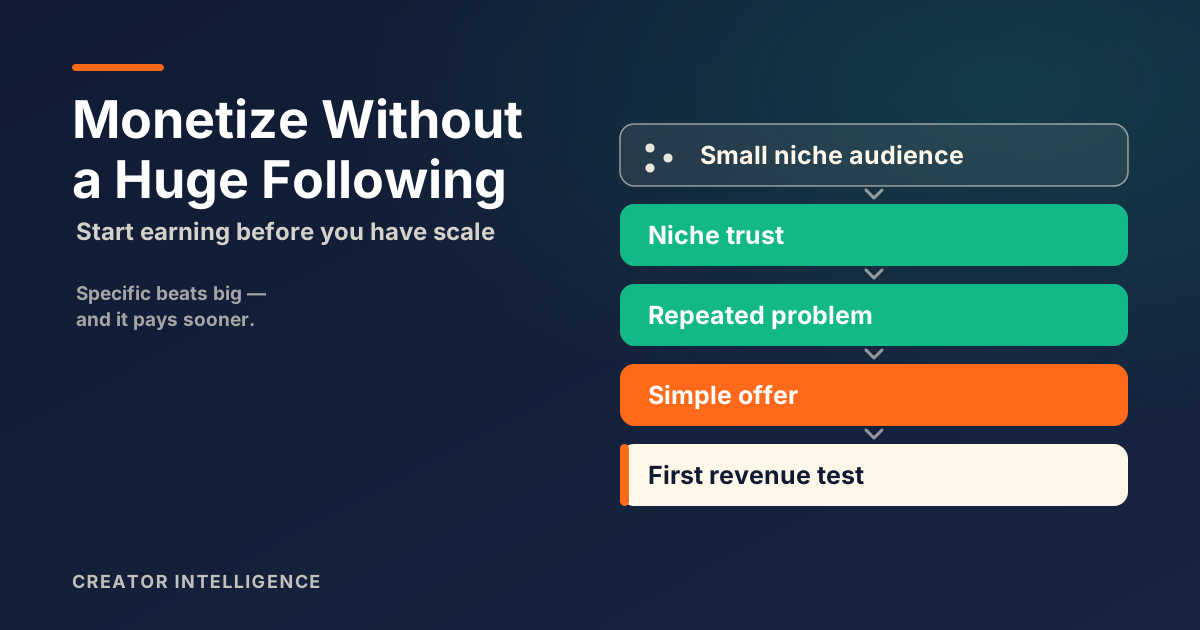
The standard advice is grow first, monetize later. For most creators, that is backwards. You do not need a huge following to make money — you need a specific audience, a problem they keep running into, and a simple offer that solves it.
A creator with 800 engaged email subscribers in a tight niche can out-earn one with 80,000 passive followers, because monetization runs on trust and specificity, not reach.
This guide gives you the five realistic ways to earn at a small audience size, which one to test first, and a 30-day plan to find out — fast — whether your audience will actually pay.
Why Small Audiences Can Monetize
Monetization does not require scale. It requires audience specificity, a clear problem, and an offer that solves it. The math is simple: a $200 workshop sold to 10 people is $2,000 — no ads, no big platform, no algorithm luck required.
What does require scale is passive revenue: ad income, programmatic display, and broad sponsorships all need real traffic before they mean anything. They get the most attention, but they are the late game, not your starting point.
Start with evidence specific to your niche: who asks for help, what they currently use, and which brands serve the same problem. A well-defined audience can make a proposal clearer, but it does not guarantee a sponsorship.
The Five Ways Small Creators Can Make Money
Five paths work at small audience sizes. They differ in setup effort, how fast they pay, and how much trust they require.
Five small-creator revenue paths, with the best fit and the main watch-out for each.
| Path | How it works | Best when | Watch-out |
|---|---|---|---|
| Affiliate | Recommend tools you already use, earn a commission | You review or teach with specific products | Promote only what you would anyway — and disclose it |
| Sponsorship | A brand pays for access to your niche audience | Your audience is clearly defined, even if small | Income is irregular; disclose paid posts |
| Digital product | A template, guide, or mini-course you own and sell | Your audience has a recurring implementation problem | Requires upfront build; validate demand first |
| Service / coaching | You sell your time and expertise directly | You can solve a painful problem 1:1 right now | Does not scale past your hours — but pays fastest |
| Paid community / newsletter | Recurring access to ongoing value | You can publish or facilitate consistently | Hardest to sustain; start after a one-time offer works |
Two notes: affiliate and sponsorship let you earn from someone else's product, which is why they are accessible early — but they are paid relationships, so they must be disclosed. Services and simple products earn from your own offer, which means you keep control and all the revenue.
Which Path to Test First
Match the path to your audience size and what you can deliver now. If your audience is very small (a few hundred), start with a service or a simple digital product. They need the fewest buyers: one $150 audit call, or ten copies of a $39 template, and you have validated that people will pay.
Affiliate and sponsorship can layer in once your niche is clearly defined and a brand or product fits naturally. They reward a specific audience, but they are easier to land after you have shown you can hold attention around one topic.
One thing underpins all five: an owned channel. Algorithm reach is rented; an email list is owned. Two hundred email subscribers who share one problem can out-convert 5,000 scattered social followers on a launch. Start building the list with a single lead magnet — one checklist or template that solves a slice of the problem — before you even have an offer.
Your First 30 Days: A Revenue Test Plan
Do not grow first. Test. The goal of the next 30 days is not a big launch — it is a clear answer to one question: will my audience pay for this?
A 30-day plan to test whether your audience will pay — in four one-week phases.
| Days | Goal | What you do |
|---|---|---|
| 1–7 | Pick the problem | Find the question you get asked most; choose one path and one urgent problem to solve. |
| 8–14 | Build a simple offer | Create the smallest version — a template, a paid audit call, or a 60–90 min workshop — plus a basic landing page and email capture. |
| 15–21 | Make the offer | Tell your warmest audience directly, email and DMs first; aim for your first 3–5 sales and talk to every buyer. |
| 22–30 | Read the signal | Use buyer feedback to adjust price, promise, or path; decide whether to repeat, raise the price, or test a different path. |
Thirty days gives you real data instead of guesses. Even five sales tell you more than another month of follower growth.
Price So Each Sale Counts
Small creators routinely underprice because they feel they have not earned higher prices yet. That is backwards. At a small audience size, you need each sale to count more, not less.
Price against the problem, alternatives, delivery costs, and what buyers are willing to pay. Any proposed price is a hypothesis until tested; a claimed time saving does not establish a universal dollar value. Use a small, clearly described offer and ask customers what made it worthwhile.
Use the Creator Revenue Calculator to model how price and conversion rate combine at your current audience size — before you commit to a number.
Don't Skip Disclosure
Two of the five paths — affiliate and sponsorship — are paid relationships, so they come with a disclosure obligation. If you earn a commission or a brand pays you (including free product), say so clearly and where people will see it: affiliate link, sponsored, paid partnership. In the U.S., the FTC Endorsement Guides set this expectation; this is general guidance, not legal advice, so check the rules for your region.
It is not just compliance. For a small creator, trust is the entire asset. Disclose plainly and you keep the credibility that makes every future offer convert.
Common Mistakes Small Creators Make
Waiting for a bigger following before making any offer — your audience does not yet know you sell anything.
Pricing too low — it shrinks revenue and trains buyers to expect premium work at a discount.
Starting with a complex product (a full course, a membership) instead of a simple, high-trust offer.
Treating social followers and email subscribers as equal — social converts far lower on direct offers.
Hiding affiliate or sponsored relationships — one trust break costs more than one commission.
Never asking buyers why they bought — early buyer conversations are your best product research.