

Introduction
Introduction
A creator can have strong reach and still have a fragile business. The reason is simple: reach is not the same thing as relationship.
Social platforms are excellent for discovery. They help new people find your work, react to your ideas, and decide whether to pay attention again. But if every important announcement, launch, survey, or offer depends on a feed algorithm, you are building monetization on rented access.
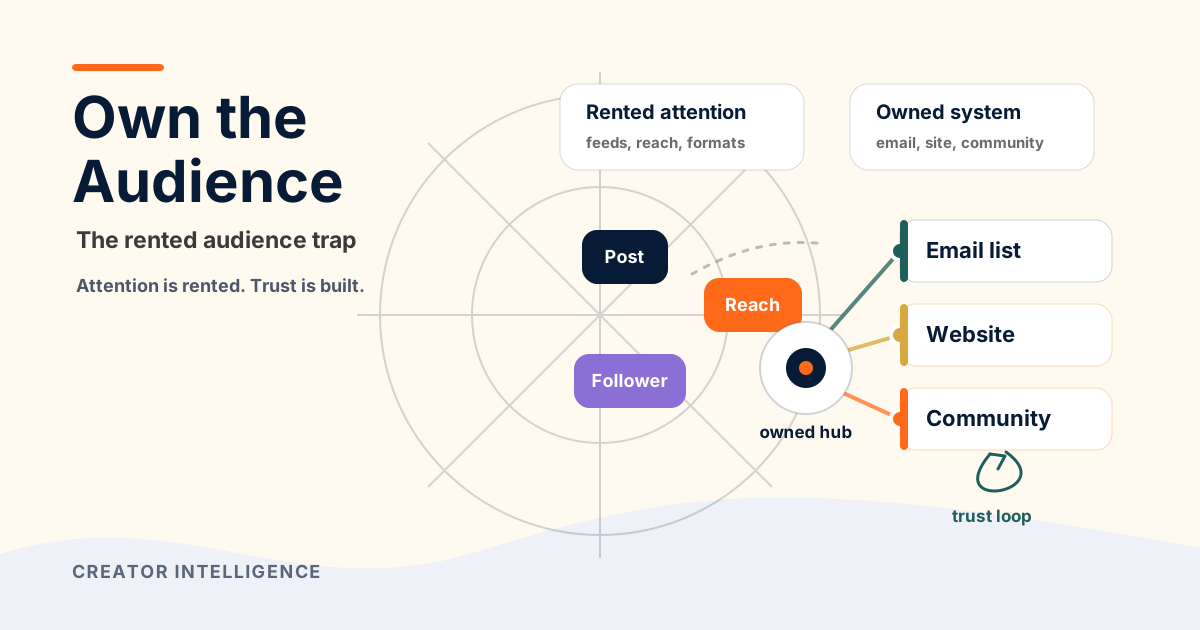
The better sequence is not platform first or owned first. It is platform attention into owned trust. Attention is rented. Trust is built. Audience ownership is strategy.
What Is an Owned Audience?
An owned audience is a group of people you can reach directly through assets you control or substantially control. For creators, the most common owned audience assets are an email list, website, community, customer list, lead magnet subscriber list, or a useful tool people return to.
Owned does not mean you control people. It means you control the communication path more than you do on a social platform. If a platform changes its feed tomorrow, an email subscriber, customer, or community member is still reachable through a channel you chose.
A simple test: if your main platform disappeared for a week, could you still contact the people most likely to buy, reply, or give useful feedback? If the answer is yes, you have some audience ownership. If the answer is no, your audience is mostly rented.
Why Rented Audience Is Risky
A rented audience is attention you access through someone else's rules. That includes followers, subscribers, and viewers on platforms where the platform controls distribution, account access, monetization terms, and format priorities.
This is not a reason to avoid platforms. It is a reason to respect the risk. Platforms can change what they reward, reduce organic reach, suspend accounts, introduce new pay rules, or shift user behavior toward a different format. The creator may have done nothing wrong and still lose access to the audience at the moment it matters.
Distribution risk: your followers may not see your post when you announce something important.
Access risk: an account issue can interrupt the audience relationship.
Format risk: the content style that grew your audience may stop being favored.
Timing risk: launches and surveys depend on the platform deciding to show the message.
Data risk: you get limited information about who is most interested, what they need, and what they might buy.
Why Monetization Is Harder Without Direct Audience Access
Monetization requires more than visibility. It requires trust, timing, repetition, and feedback. A single post can create awareness, but most people need several touchpoints before they understand an offer, believe it fits them, and decide to act.
Direct audience access makes those touchpoints easier. You can explain the problem, share a case study, ask what people need, invite replies, segment interest, and launch at the right moment. Without direct access, every step becomes a public post competing with everything else in the feed.
That is why creators often feel stuck: they have attention, but no system for moving the warmest people into a deeper relationship. They try to monetize the feed directly, when the better move is to build a bridge from the feed to an owned asset first.
The Creator Audience Ownership Ladder
Audience ownership is not binary. It is a ladder. Each step gives you a little more trust, context, and control than the step before.
The creator audience ownership ladder moves from rented attention to stronger owned relationships.
| Level | Audience Asset | What It Means | Monetization Role |
|---|---|---|---|
| 1 | Platform reach | People discover you through feeds, search, recommendations, or shares. | Useful for awareness, weak for direct selling by itself. |
| 2 | Engaged followers | People comment, save, reply, or return to your content. | Shows topic-market interest, but still depends on platform access. |
| 3 | Email subscribers | People give permission to hear from you directly. | Best first owned asset for launches, surveys, and nurturing trust. |
| 4 | Website visitors | People can find your thinking, tools, and offers outside a feed. | Supports search, credibility, capture, and evergreen discovery. |
| 5 | Community members | People participate in a space with repeated interaction. | Strong for feedback, belonging, and deeper problem understanding. |
| 6 | Customers | People have paid and can be served again if the value is real. | Strongest commercial signal and feedback loop. |
The goal is not to climb every step immediately. The goal is to stop treating level 1 as if it were level 6.
What to Build First: Email List, Website, Community, Lead Magnet
Most creators should not begin with a complicated funnel. Start with one direct channel and one useful reason to join it.
The simplest first system is an email list plus a lead magnet. The lead magnet can be a checklist, calculator, template, short guide, swipe file, or decision worksheet. It should solve one narrow problem your audience already asks about. Then give it a clear home on your website or landing page.
A community can come later, once there is enough repeated conversation to justify it. Communities are powerful, but they require facilitation. A silent community is not an owned audience system; it is another place to maintain.
Start with email when you want reliable direct communication.
Add a website page so your best explanation, opt-in, and offer are findable outside social feeds.
Create one lead magnet that solves a specific problem, not a vague resource library.
Add community only when people already want to interact with you or each other repeatedly.
Use the Creator System Readiness Quiz if you are unsure which part of the audience system is weakest.
Mistakes Creators Make When Building an Audience
Waiting until a launch to start collecting emails.
Using a generic newsletter CTA with no concrete reason to subscribe.
Creating too many lead magnets before one has proven demand.
Treating the email list as a broadcast channel only, instead of asking questions and learning.
Building a community before having a clear purpose or facilitation rhythm.
Sending people from every post to a different place instead of repeating one simple bridge.
Assuming a large follower count means the audience is ready to buy.
How to Know If You Are Ready to Monetize
You do not need a massive audience to monetize, but you do need a visible relationship between audience problem, trust, and offer. Monetization is not just the moment you ask for money; it is the result of a system that has been teaching, listening, and earning permission.
You are closer to ready when people ask implementation questions, reply to emails, save problem-solving content, join a waitlist, or tell you what they are trying to achieve. You are less ready when attention is broad, passive, and disconnected from a clear problem.
You can name the specific audience problem you solve.
People have taken a direct action beyond following: email signup, reply, survey, download, or booking.
Your owned channel has had several trust-building touchpoints before the offer.
You have a simple first offer that fits the problem, not a large product built on a guess.
You have modeled conservative revenue assumptions in the Creator Revenue Calculator.
Practical 7-Day Action Plan
If your audience is mostly rented today, the fix starts with one simple bridge. This seven-day plan is enough to create the first version.
A practical 7-day plan to move from rented attention to the first owned audience asset.
| Day | Action | Output |
|---|---|---|
| 1 | Pick one audience problem you hear repeatedly. | One problem statement in your audience's language. |
| 2 | Choose your first owned asset. | Email list, with one simple signup page or website page. |
| 3 | Create a focused lead magnet. | Checklist, template, mini-guide, worksheet, or calculator idea. |
| 4 | Write the opt-in page and welcome email. | A clear promise and first trust-building touchpoint. |
| 5 | Add one CTA to your bio and best evergreen content. | A bridge from platform attention to owned access. |
| 6 | Invite your warmest followers directly and calmly. | Replies, signups, and objections to learn from. |
| 7 | Review the signal. | What converted, what confused people, and what to improve next. |