

Introduction
Introduction
A follower count feels like an asset: it is on your profile, it goes up, and it looks like proof you have built something. But here is the uncomfortable part — you do not actually own those followers. The platform does.
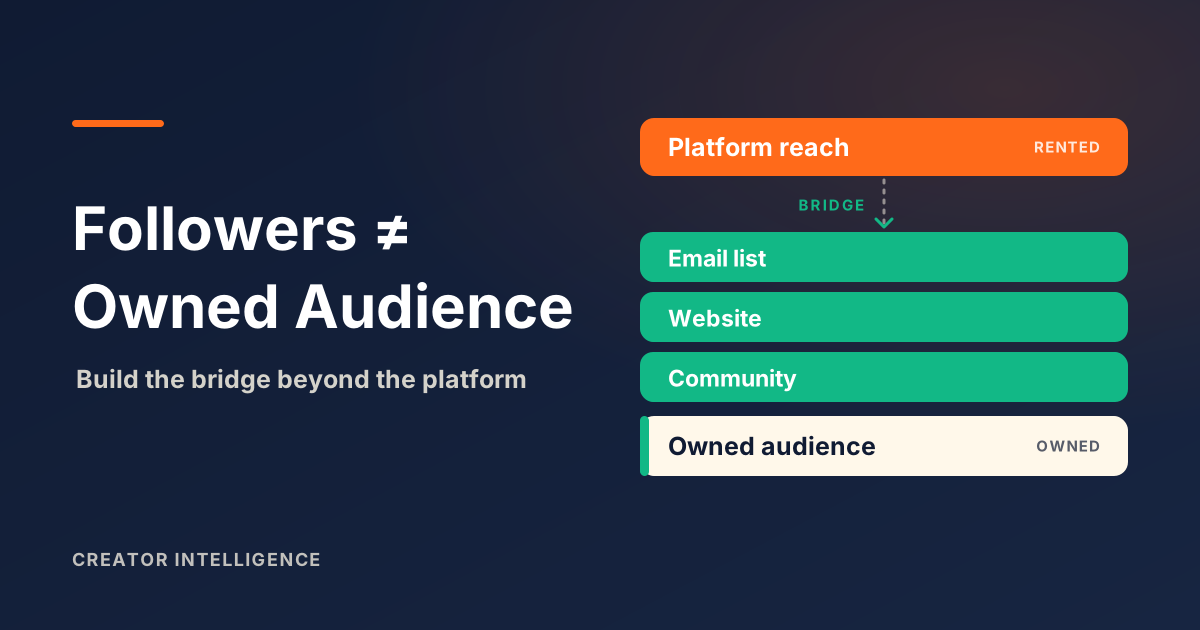
It decides how many of them see your next post, what the rules are, and whether your account stays up at all. That is not a reason to quit platforms; it is a reason to build a bridge from the attention you earn there to a relationship you actually control.
This guide defines what an owned audience really is, the risks of platform dependency, and a simple way to build the bridge — including a 30-day starter plan.
Why Followers Feel Like Ownership but Are Not
Followers feel like ownership because the number lives on your profile and grows with your work. It looks like a list of people who chose you.
But a follow is permission to maybe appear in someone's feed — not a direct line to them. The platform sits in the middle of every interaction: it decides reach based on its algorithm, changes the rules when it wants, and controls whether your account exists tomorrow. You rent the connection; you do not own it.
None of that makes followers worthless. Platform attention is how most creators get discovered. It just means a follower count is the start of a relationship, not the relationship itself.
What Owned Audience Actually Means
An owned audience means a more portable, permission-based relationship, such as an email list you can export. It does not mean ownership of people or guaranteed access to their attention.
An email list lets you contact opted-in subscribers without depending on a social feed. Inbox delivery is still affected by spam filters, sender reputation, provider rules, and subscriber choices. A website or community also has hosting and access dependencies, so check export and backup options.
The test is simple: if a platform disappeared tomorrow, could you still reach these people? If yes, that is owned. If no, that is rented.
The Risks of Platform Dependency
Depending on a single platform for your entire audience concentrates risk you cannot control.
Reach risk — the algorithm decides how many followers see each post, often a small fraction, and it can change overnight.
Rules risk — platforms change formats, policies, and monetization terms on their own schedule.
Access risk — accounts can be restricted, hacked, or suspended, sometimes by mistake and with no warning.
Relationship risk — even loyal followers may never see your most important announcement if the algorithm does not surface it.
You do not have to fear platforms to respect this. You just need somewhere to stand that is not built entirely on rented ground.
The Bridge: From Platform Attention to Owned Relationship
The move is not platforms versus owned. It is a sequence that turns one into the other.
Your content earns attention on the platform. Attention, over time, builds trust. Trust is what makes someone willing to cross the bridge — to join your email list, visit your site, or enter your community. Once they are there, you can make offers and gather feedback directly, without an algorithm in the middle. The platform stays valuable for discovery; the owned asset is where the relationship compounds.
The bridge: Content → Attention → Trust → Email / Website / Community → Offer → Feedback.
Owned Audience Assets Creators Can Build
You do not need all of these. You need one, then maybe a second. Here is the menu, roughly in order of accessibility.
Email list — a portable opt-in contact channel. It can reduce feed dependence, but delivery and attention are not guaranteed.
Website — a home you control for content, offers, and capture. It also makes you discoverable through search, not just feeds.
Community — a space you host (forum, group, membership) where the relationship is with you and other members, not the platform's ranking.
Customer list — the strongest signal of all: people who have paid you. Even a small list of buyers is a durable, ownable relationship.
Utility tools / resources — a calculator, template, or tool people return to creates repeat, owned touchpoints, and often feeds your email list.
How to Start Without Overcomplicating It
The mistake is trying to build all five at once and stalling. Do not.
Pick one capture asset — almost always email — and one reason for people to join: a single lead magnet that solves a slice of your audience's problem, like a checklist, a template, or a short guide. Add one clear call to action in your content that points to it. That is the whole starter system: one asset, one magnet, one CTA.
You can add a website, community, or tools later. The first win is simply turning some of your rented reach into a list you own.
A Simple 30-Day Owned Audience Plan
You can stand up the basics in a month without it taking over your life.
A simple 30-day plan to start an owned audience, in four one-week phases.
| Days | Focus | What you do |
|---|---|---|
| 1–7 | Pick your asset | Choose email as your first owned asset and a simple tool to collect addresses. |
| 8–14 | Make a lead magnet | Create one small resource that solves a specific slice of your audience's problem. |
| 15–21 | Add the bridge | Put one clear call to action in your content and bio that points to the lead magnet. |
| 22–30 | Invite and review | Invite your warmest followers to join, then review what converted and what did not. |
Thirty days will not move your whole audience. It will prove the bridge works — and give you something no platform can switch off.
Common Mistakes
Treating follower count as if it were an owned, reachable audience.
Waiting to start an email list until you are 'big enough' — the best time is before you need it.
Trying to build every owned asset at once instead of starting with one.
Collecting emails with no reason to join (no lead magnet) and wondering why no one signs up.
Never making an offer or sending anything, so the list goes cold.
Abandoning platforms entirely — they are still your best discovery engine and the on-ramp to the bridge.